

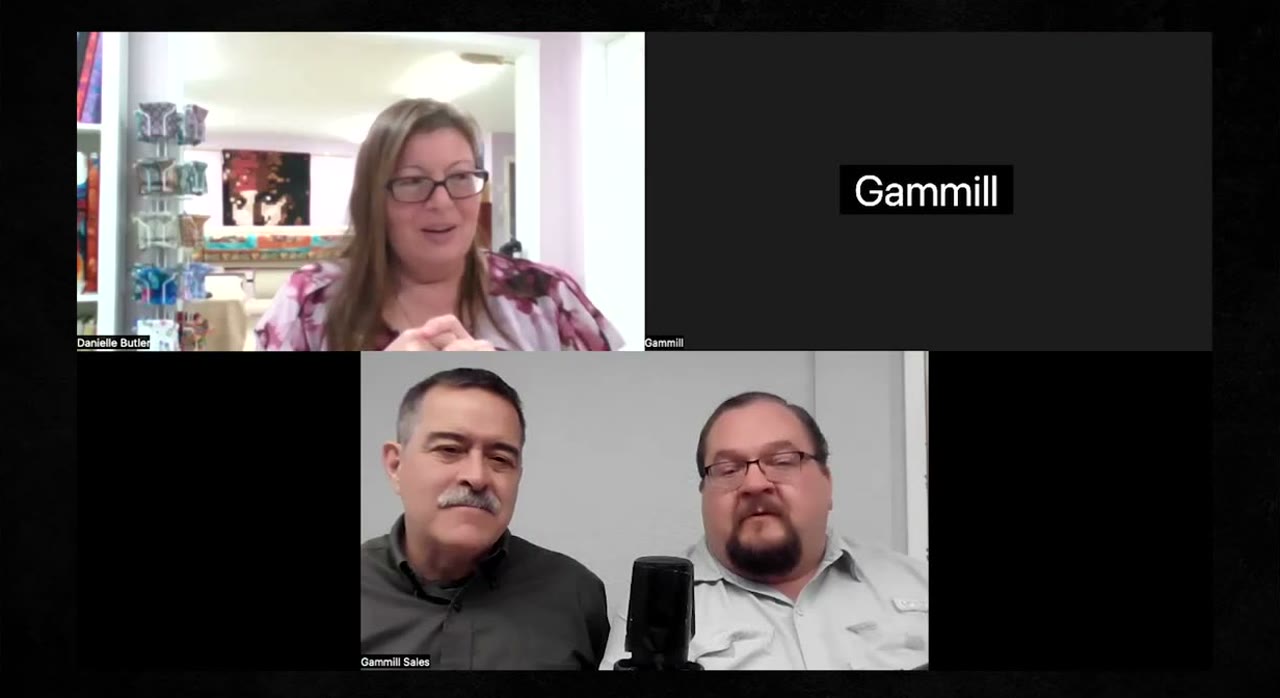
Key takeaways
- Start by quilting for yourself, but be open to opportunities—word of mouth can launch your business.11:38
- You don’t need a huge studio or expensive advertising; Facebook and local guilds can fill your schedule.13:24
- Paying off a longarm machine is possible in a year with steady work and careful planning.18:41
- Getting an LLC early can save significant money on batting and thread.47:12
- Quilting for others is both technical and emotional—every quilt has a story and meaning.23:24
- Building a business takes faith, patience, and community support.36:14
The numbers
| Metric | Value | Basis | Note |
|---|---|---|---|
| Pricing | |||
| Thread and batting charges | Danielle mentions that getting an LLC allows you to buy thread and batting wholesale, which is much cheaper (e.g., $8-9 per spool vs $14-17 retail), but does not specify how she charges customers for thread or batting. | 47:37 | No info on customer charges; only mentions her own supply costs. |
| Volume and capacity | |||
| Quilts per year | 200 quilts | 22:34 | Danielle says 'a couple hundred a year' and gives recent pace of 7 quilts in 8 days. |
| Time | |||
| Quilting hours per week | 30–36 hours | 42:10 | Danielle says 5-6 hours per day, typical week; context is quilting and business work. |
| Money | |||
| Lifetime revenue per machine | $85 | 18:51 | Danielle says it took 85 customer quilts to pay off her machine; no dollar figure given. |
| Equipment | |||
| Machine (model, throat, table) | Gammill Vision 2.0, 22 inch head, 12 foot frame | 5:15 | Purchased new, delivered Dec 2020. |
| Machine payback (stated) | 1 year | 18:41 | Paid off machine in just under a year with quilting revenue. |
| Number of machines | 1 | 5:13 | Only one longarm (Gammill Vision 2.0) mentioned. |
| Business profile | |||
| Years in business | 3–4 years | 12:51 | Started quilting for customers in 2021, LLC in late 2022; interview in 2024. |
| Years quilting | 5 years | 3:32 | Started longarming in 2019. |
21 other metrics were not covered in this interview
- Edge-to-edge rate
- Custom rate
- Queen-size price, edge-to-edge
- Queen-size price, custom
- Average price per quilt
- T-shirt quilt price
- Backlog / waiting list
- Turnaround time
- Time per quilt, edge-to-edge
- Time per quilt, custom
- Edge-to-edge share of work
- Mail-in share
- Hourly rate (stated)
- Annual revenue (stated)
- Worst year revenue
- Annual earnings (est.) (have: quilts per year 200 quilts; missing: a price (average price per quilt, queen-size edge-to-edge price, or edge-to-edge rate); or, alternatively, have: quilting hours per week 30–36 hours; missing: a stated hourly rate)
- Effective hourly rate (est.) (have: quilting hours per week 30–36 hours; missing: annual earnings (est.))
- Machine cost
- Machine payback (est.) (missing: machine cost and annual earnings (est.))
- Studio size
- Customers
What the numbers say
What the numbers say
The available figures give a partial picture of this quilting business’s capacity and payback, but leave most pricing and throughput details unclear. Danielle reports quilting 200 quilts per year,22:34 working 30–36 hours per week on quilting and business tasks,42:10 and operating with a single Gammill Vision 2.0 longarm machine.5:13 She states that it took 85 customer quilts to pay off her machine, which she accomplished in just under a year [[t=1121, t=1131]]. However, no actual prices per quilt or per hour are provided, so average revenue and earnings cannot be calculated.
The stated throughput—about 200 quilts annually—suggests steady demand and a manageable workflow for a solo operator, but without turnaround times or backlog data, it’s hard to judge true capacity or bottlenecks. The business benefits from wholesale supply costs for thread and batting (e.g., $8–9 per spool vs. $14–17 retail), but there is no information on how these costs are passed on to customers, if at all.47:37
Overall, while the numbers confirm that Danielle’s business can pay off a major equipment investment in about a year and handle a couple hundred quilts annually, the lack of pricing, revenue, and detailed time-per-quilt data means that profitability, pricing strategy, and efficiency remain largely unknown. Any further analysis of payback or hourly rates would require assumptions not supported by the stated figures.
Starting a Longarm Quilting Business: Danielle’s Leap of Faith
Danielle Butler’s journey in starting a longarm quilting business began not with a grand plan, but out of necessity and a willingness to pivot. In 2020, after receiving a company-wide email about mandatory vaccinations—a medical risk for her due to a past reaction—Danielle realized she needed a new path. “I already knew I like long-arming, maybe this is something that can get me through,” she recalls.8:55 Within two days of that pivotal email, she purchased her Gammill Vision 2.0, a 22-inch head on a 12-foot frame, and set up shop in her backyard studio.9:11
Danielle’s story shows that starting a longarm quilting business doesn’t require perfect timing or resources. It takes readiness to act when the opportunity—or the necessity—arises. “There is no perfect time. You just sort of at some point have to take it on faith and make that leap, and you’re going to bounce a couple of times while you learn to fly, but it’s going to be so amazing when you do”.53:43
She emphasizes that her decision was made quickly, but not lightly. The pressure of losing her job and the uncertainty of the pandemic forced her to think creatively about her future. “I went two days after that email came and bought the Gamma… we’re going to have to pivot and find another thing, find some way to do this”.9:35 Even before she had customers, Danielle was determined to make it work: “Even if I’m selling quilts that are completely made or I’m just quilting for myself, whatever it is, we’ll figure it out”.10:11
“There is no perfect time. You just sort of at some point have to take it on faith and make that leap, and you're going to bounce a couple of times while you learn to fly, but it's going to be so amazing when you do.”
From First Customer to Word-of-Mouth Growth
Danielle’s first customer, Ms. Charlotte, found her through a simple Facebook page where Danielle posted photos of her own quilts. “Ms. Charlotte calls and she said, I saw your Facebook page and I would like to know if you do quilting for the public. I never quilted for anybody but myself. And I said, yes, I do”.11:55 That first quilt was nerve-wracking: “My hands were shaking when I loaded her quilt in the frame… I was so terrified it was going to mess her quilt up”.14:03
Ms. Charlotte’s satisfaction led to more customers: “Those friends showed friends. I think I’m on like five or six people out from Ms. Charlotte at this point that if you did a little string diagram, they would all point back to Ms. Charlotte”.17:06 Danielle didn’t invest in advertising; instead, she relied on Facebook and word-of-mouth, supplemented by joining local quilt guilds. This organic approach filled her schedule and built a loyal customer base.
She describes the emotional impact of that first customer: “That particular day I was so scared. I thought we were going to lose the house. I thought so many things… It’s very, very scary to face the possibility that no one will ever hire you again, just because you don’t want to risk dying”.17:26 The support from Ms. Charlotte and the quilting community gave Danielle hope and momentum. “I have several times [told her she was an answer to prayer]. And I don’t think she believes me. I don’t think she really truly understands how much I love her for showing up that day”.17:14
“My hands were shaking when I loaded her quilt in the frame... I was so terrified it was going to mess her quilt up.”
Equipment Choices and Paying Off the Investment
Danielle started with a used machine that was unreliable, but quickly upgraded to a new Gammill Vision 2.0. She chose a 12-foot frame after realizing that the extra space of a 14-foot wasn’t necessary for most customer quilts.5:38 The investment was significant, but she financed it with savings, a small bank loan, and a trade-in on her old machine.18:14
Remarkably, she paid off her four-year loan in just under a year: “I took out a four year loan and I paid it off in a year… It took 85 quilts to pay off Vixen”.18:41 Danielle’s experience demonstrates that with steady demand and disciplined workflow, a longarm machine can pay for itself much faster than many expect.
She also shares practical advice for those considering their first machine: “If you’re looking at it, the 12 works for pretty much anything you’ll ever see”.5:38 Danielle named her machine Vixen, saying, “Anything that costs that much, that needs this much, you know, love and care… She’s beautiful. So, that’s Vixen”.20:38
Danielle’s approach to learning was hands-on and creative. She recounts advice from her dealer: “If you want to get good at this… go home and pull out your scrap bin… sew stuff together and don’t measure anything… If you can make that flat, then you could do anything”.15:04 This willingness to practice on imperfect pieces helped her build confidence and skill.
“I took out a four year loan and I paid it off in a year... It took 85 quilts to pay off Vixen.”
Workflow, Volume, and Business Structure
Quilting is now Danielle’s full-time job. She typically completes 200 quilts per year, working 30–36 hours a week: “I’ve done seven in the last eight days. So, a couple hundred a year. It would be up there”.22:34 Most of her work is edge-to-edge, with some modified custom quilting for special requests: “I do a lot of edge to edge, not so much custom. I do what I call modified custom… there’s like edge to edge and then I stop, break the pattern… and then just custom around it”.19:22
Danielle tracks her work and customer preferences using Excel spreadsheets and carbon-copy invoices, a habit carried over from her previous career: “I use Excel. I use Excel spreadsheets… when the intake comes in, I have invoices that are… carbon copy”.26:12 She describes herself as “very OCD” about record-keeping, a skill honed from years in the military and laboratory work.26:49
She recommends getting an LLC early—not just for legal protection, but because it opens up wholesale pricing on thread and batting, which “means a whole lot more profit in your pocket”.47:12 Danielle explains, “Having a wholesale license, you can get thread a little bit cheaper… Even if you never plan to sell the first piece of fabric, just being able to get your thread wholesale will mean a whole lot more profit in your pocket”.47:24
Danielle also stresses the importance of connecting with local quilt shops: “Make friends with your local quilt shop because they’re going to be a valuable resource. They can get you thread. They can do all of these things”.46:54
“The thing I wish that somebody had told me from the start was LLC pretty quickly because you can get batting a little bit cheaper... Even if you never plan to sell the first piece of fabric, just being able to get your thread wholesale will mean a whole lot more profit in your pocket.”
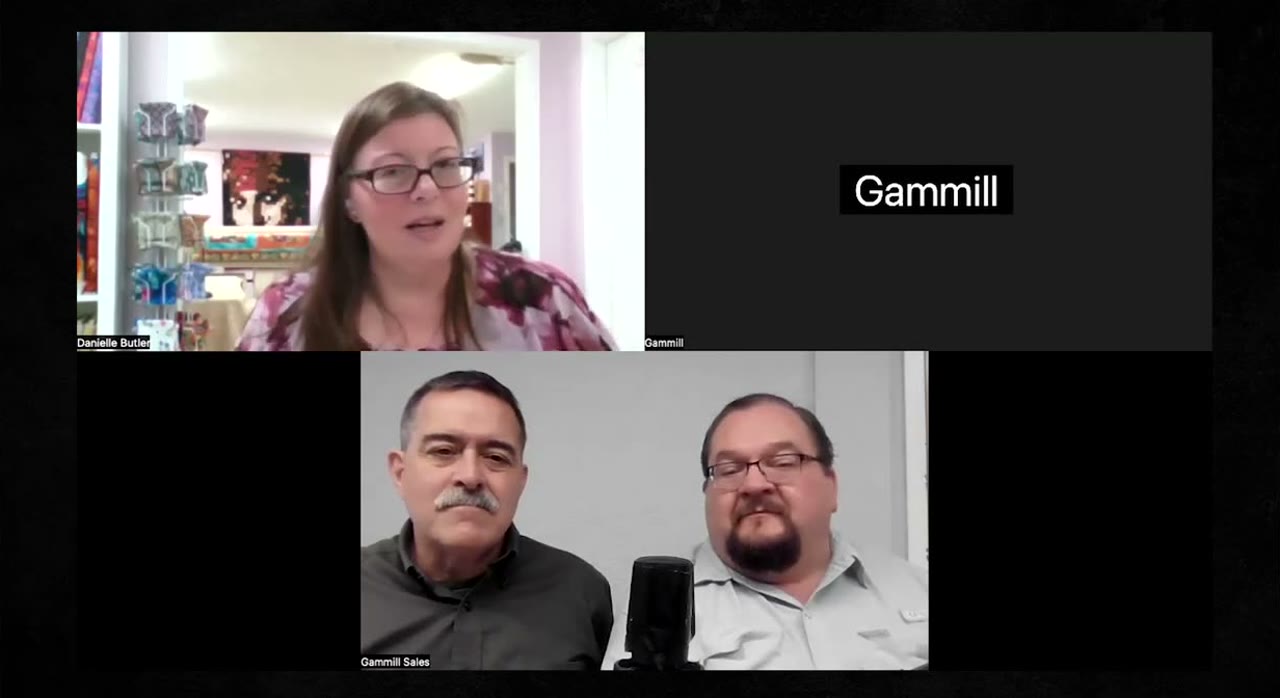
Building a Store and Expanding Services
As her business grew, Danielle listened to customer feedback—especially about the lack of wide back fabric options. “People kept bringing me backings… I kept hearing, oh, I don’t like this seam down the center of my back… There’s got to be more fabric out there. I was like, yeah, I can do that”.50:15
She LLC’d Ritzy Quilting Company in late 2022, named after her grandmother, and gradually expanded from her backyard studio to a dedicated building. “I bought the building. And now it’s a fabric store and Vixen is still the heartbeat”.31:02 Danielle now carries nearly 100 wide back options, and welcomes both quilting clients and fabric shoppers.51:21
The transition from home studio to storefront was both exciting and daunting. Danielle describes the moment she realized she was becoming a fabric store: “I think I’m turning into a fabric store”.30:41 The decision to buy a building was made after a sign she interpreted as encouragement: “These four ladies that night decided to spend close to fifteen hundred dollars in widebacks purchase. So I stood there and cut fabric for a couple of hours. And when they left, I went, OK, God, I got what you were trying to tell me. That was the sign. We’ll go through with it”.34:20
Danielle’s store is a community hub, welcoming both local quilters and travelers. She recounts, “There is a lady on the other end and she goes, I see that you have your only online, she said, but you’re not far from where we’re going to be passing through on our way to a quilt retreat in Texas… if you don’t mind going through my backyard into this building… come on and shop”.33:10
Meaning, Community, and the Emotional Side of Quilting
For Danielle, quilting is about more than thread and fabric. “A quilt is never, ever, ever just a quilt… That quilt has a life and it’s going to have memories and it’s made this comfort and it’s so comforting to people when they get that quilt”.23:50 She often works on memory quilts or unfinished projects from customers’ loved ones, and sees her role as both technical and emotional support.
She describes how customers bring her deeply personal projects: “They’ll say, oh, this was my brother’s clothes. He just passed away and I’m making this for my nieces and my nephews. Or you get, I’m making this quilt for a friend of mine who just, her daughter lost the baby. And this is the receiving blankets and the pieces and her maternity clothes”.23:16
Danielle credits her family—especially her daughter—and her faith for sustaining her through the ups and downs. “You don’t build something like this for yourself. It’s like planting a fruit tree… What I’m building right now is for my daughter and whatever children she may have at some point. And that next generation”.36:22
She also finds meaning in finishing quilts left behind by others: “I cannot tell you how many quilts have been left undone that people have brought to me and said, my grandmother didn’t get this finished. And I’ll finish it for them”.41:22 The emotional connection to quilting is a core part of her business and her motivation.
“A quilt is never, ever, ever just a quilt... That quilt has a life and it's going to have memories and it's made this comfort and it's so comforting to people when they get that quilt.”
Challenges and Advice for New Quilting Entrepreneurs
Danielle is candid about the challenges: “The hardest things that I’ve had to learn is it doesn’t come when you want it to. It comes when it has to”.31:57 She emphasizes patience, faith, and the importance of community support. The journey from uncertainty to stability was marked by moments of fear and doubt, but also by unexpected support and encouragement.
She urges new quilters to connect with local quilt shops and to formalize their business structure sooner rather than later: “The thing I wish that somebody had told me from the start was LLC pretty quickly because you can get batting a little bit cheaper… Even if you never plan to sell the first piece of fabric, just being able to get your thread wholesale will mean a whole lot more profit in your pocket”.47:12
Her advice to those on the fence: “You have two choices. You can live your fear or you can live your dreams. Choose wisely, but you don’t get both”.55:20 Danielle also highlights the importance of faith and resilience: “With a whole lot of faith, it is absolutely possible”.54:57
She shares that her business has given her a sense of control and purpose she never found in her previous career: “Quilting let me feel like I was in control of my day. It’s let me feel like I’m in control of my future”.43:29
“You have two choices. You can live your fear or you can live your dreams. Choose wisely, but you don't get both.”
Looking Forward: Building for the Next Generation
Danielle sees her business as a legacy, not just a job. “My faith says that this is not my fruit. I’m just a little piece. My grandmother started it. I put a little in and I’m pretty sure my daughter and whatever children she has, she’s going to be what sees the full magnification of this”.37:03
Her story is a testament to the power of resilience, community, and the enduring value of quilting—both as a craft and as a business. Danielle’s hope is that her daughter and future generations will benefit from what she’s built: “That keeps me going is that my daughter will never have to work as hard or be as scared as I have. And that whatever children she has, I will be able to have done my part to make their life better. And that’s what this is to me, is an investment for the future”.37:15
She encourages others to plant their own seeds for the next generation, whether in quilting or any other pursuit. Danielle’s journey shows that starting a longarm quilting business is not just about income, but about creating something lasting for your family and your community.
Questions this interview answers
How did Danielle Butler start her longarm quilting business?
Danielle started her longarm quilting business after leaving her previous job in 2020 due to a medical issue with workplace vaccine requirements. She purchased a Gammill Vision 2.0 and began quilting for herself, then for others after her first customer found her through Facebook. Word-of-mouth and local guild connections helped her business grow quickly.11:38
How long did it take Danielle to pay off her longarm machine?
Danielle paid off her longarm machine in just under a year, completing 85 quilts to cover the cost of her four-year loan.18:41
How many quilts does Danielle complete per year?
Danielle typically completes about 200 quilts per year, working 30–36 hours a week.22:34
What business advice does Danielle have for new quilting entrepreneurs?
Danielle recommends getting an LLC early to access wholesale pricing on thread and batting, and connecting with local quilt shops for resources and support. She also stresses the importance of faith, patience, and community.47:12
What is the focus of Ritzy Quilting Company today?
Ritzy Quilting Company offers longarm quilting services and a wide selection of wide back fabrics, serving both quilting clients and fabric shoppers. Danielle sees her business as a legacy for the next generation.31:02
Source
This article was written from Episode 43 of Quilting Business Success with Danielle Butler. Quotes are verbatim and link to the moment in the recording. Full transcript · Markdown version.