

Key takeaways
- Page charges about 2.3¢ per square inch for edge-to-edge quilting, including thread, batting, and setup, and is on the lower side for her metro area.23:52
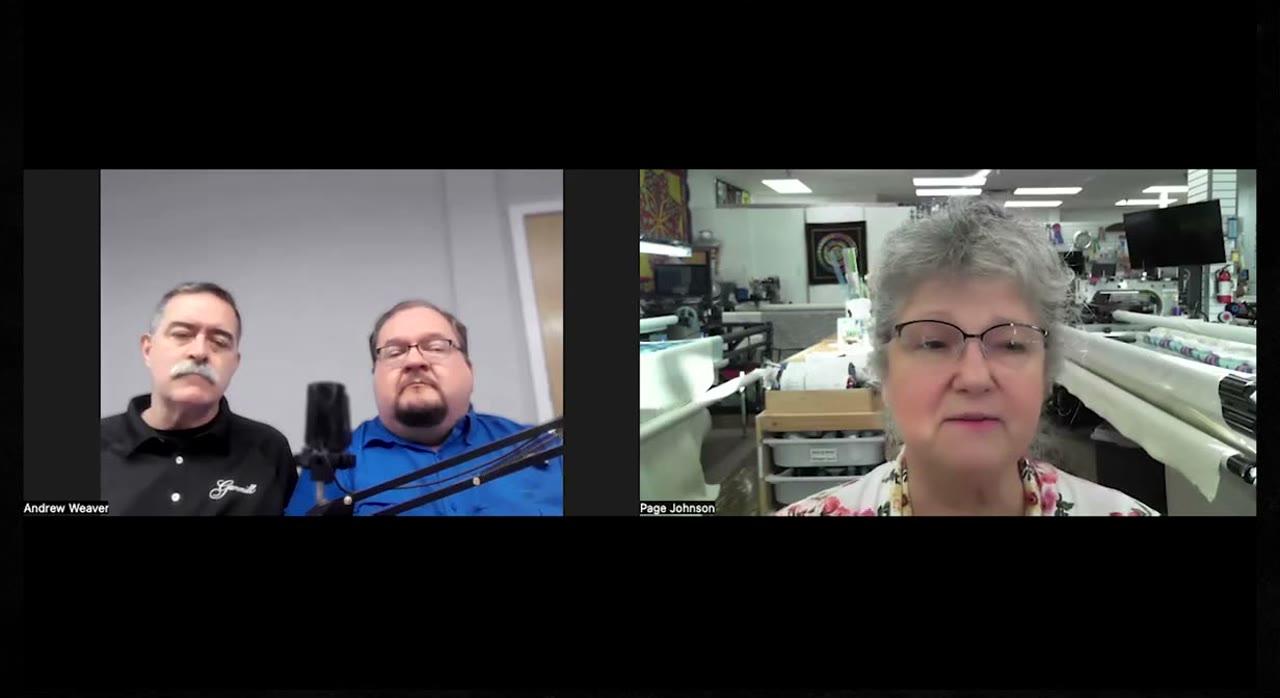
- She started her business in her basement, grew through guilds and word-of-mouth, and now operates from a storefront with five Gammill longarms and 12 employees.2:29
- Efficiency and standardized intake processes are crucial for scaling and maintaining quality.27:51
- Investing in education and continuously improving skills and systems has been key to her growth.15:23
- Page’s business now generates around $250,000 in annual revenue, with much reinvested into equipment and supplies.25:13
- She emphasizes being intentional about workflow, pricing, and customer communication to stand out in a competitive market.28:00
The numbers
| Metric | Value | Basis | Note |
|---|---|---|---|
| Pricing | |||
| Edge-to-edge rate | 2.3 ¢/sq in | 23:52 | Paige's stated rate, calculated from $30/sq yd; includes thread, batting, setup |
| Thread and batting charges | Edge-to-edge price includes thread, batting, and setup. Ten kinds of batting available; most people buy backing from her. 900 thread colors. | 22:15 | Paige's business model; thread/batting included in base rate |
| Money | |||
| Annual revenue (stated) | $250,000 | 25:13 | Paige's 2024 projected revenue; 'on track to do $250,000' |
| Equipment | |||
| Machine (model, throat, table) | Five Gammill longarms (Statler, Stewie, Stella, Stormy, Optimus Prime); original was Classic Plus with stitch regulator, later added Statler; all Gammill brand. | 55:25 | Paige's current and past machines, all Gammill, some computerized |
| Number of machines | 5 | 2:28 | Paige's current count, confirmed in interview |
| Business profile | |||
| Years in business | 25 years | 4:20 | Started longarming professionally in 2000; interview in 2024 |
| Years quilting | 53 years | 4:05 | Quilting since age 7; Paige is 60 in 2024 |
23 other metrics were not covered in this interview
- Custom rate
- Queen-size price, edge-to-edge
- Queen-size price, custom
- Average price per quilt
- T-shirt quilt price
- Quilts per year
- Backlog / waiting list
- Turnaround time
- Time per quilt, edge-to-edge
- Time per quilt, custom
- Edge-to-edge share of work
- Mail-in share
- Quilting hours per week
- Hourly rate (stated)
- Worst year revenue
- Lifetime revenue per machine
- Annual earnings (est.) (have: edge-to-edge rate 2.3 ¢/sq in; missing: quilts per year; or, alternatively, missing: hours per week and a stated hourly rate)
- Effective hourly rate (est.) (missing: annual earnings (est.) and hours per week)
- Machine cost
- Machine payback (stated)
- Machine payback (est.) (missing: machine cost and annual earnings (est.))
- Studio size
- Customers
What the numbers say
What the numbers say
The available figures give a partial picture of this quilting business’s capacity, pricing, and throughput. The business operates five Gammill longarm machines,2:28 suggesting a substantial production capacity, but the actual number of quilts completed per year, turnaround time, and hours worked are not stated, so the true throughput is unclear. With 25 years in business,4:20 the operation appears well-established.
Pricing for edge-to-edge quilting is clearly stated at 2.3¢ per square inch, calculated from a $30 per square yard rate, and this price includes thread, batting, and setup 23:52.22:15 However, rates for custom work, T-shirt quilts, and average quilt prices are not disclosed, making it difficult to assess the overall pricing structure or the share of higher-value work.
The business projects $250,000 in annual revenue for 2024,25:13 but without details on the number of quilts produced, average price per quilt, or labor hours, it is not possible to estimate effective hourly rates, annual earnings, or machine payback periods. The figures provided suggest a high-volume operation with a focus on edge-to-edge quilting, but most key metrics about workload, efficiency, and profitability remain unstated.
Setting Your Longarm Quilting Price: What Works for Page
If you’re searching for how much to charge for longarm quilting, Page Johnson’s approach is refreshingly clear and grounded in decades of experience. She charges about 2.3¢ per square inch for edge-to-edge quilting, which works out to roughly $30 per square yard. This price includes thread, batting, and setup—a package that sets her apart in her major metropolitan area. “My thirty dollars includes thread, batting and set up. And I do carry ten kinds of batting so you can go up and go up. Most people buy the backing from me now. I have over three hundred and fifty wide backs and the ten kinds of batting and the nine hundred colors of thread”.22:21
Page is upfront that her pricing is on the lower end for her area, where some competitors charge up to 3¢ per square inch. She intentionally avoids the per-square-inch model that many local competitors use, preferring to offer a bundled price with lots of options. This, she says, keeps customers coming back and makes her stand out from competitors who charge by the square inch or add fees for extras.22:10
Her high-end custom work, however, is priced at a premium and is often booked out up to two years in advance. “My high end custom is on the high side. And I’m taking, I have a list and people can get on that. And I’m out two years if you want to be on there”.24:22 For quilters considering their own pricing, Page’s model shows the value of clarity, inclusivity, and understanding your market.
“My thirty dollars includes thread, batting and set up. And I do carry ten kinds of batting so you can go up and go up. Most people buy the backing from me now. I have over three hundred and fifty wide backs and the ten kinds of batting and the nine hundred colors of thread.”
From Basement Beginnings to a Thriving Storefront
Page’s business began humbly in her basement, quilting for relatives while raising four young children. Her first machine was a gift from her aunt—a Gammill Classic Plus with a stitch regulator. “I was gifted a brand new. It was a Classic Plus. So it had a stitch regulator. That was high tech back then, wasn’t it?”.5:49
She balanced motherhood and business, quilting during the day after school drop-offs and again at night. “The kids would go to—I would run kids in the morning to school, breakfast, lunch, that kind of stuff, and then I’d quilt all day, and then I’d go and pick them up, and we would do the after-school things, and then I’d quilt again at night”.9:08
As her reputation grew, she moved to a storefront in a strip center just south of the Twin Cities, which brought in walk-in traffic and required her to hire staff. Today, she operates with five Gammill longarms and 12 employees, a leap made possible by reinvesting profits and staying close to her customer base.2:29
She notes that the transition from home to storefront brought new challenges and expenses, such as insurance and payroll, but also allowed her to expand her reach and build a vibrant quilting community. “When you start having people come in, you need riders on that. And hiring staff, I use a third party payroll system… I leave it to the professionals”.48:39
Finding and Keeping Customers in a Crowded Market
Getting her first non-family customers was a challenge. Page joined multiple guilds and attended every local quilt shop event, using clever tactics to get her work seen. “I would sew my binding on by hand. Everybody wants to see your quilt, so you hold it up, and you tell them you quilted it. I took my binding off, I went to the next guild, and I sewed it on by hand again… until somebody said, you know, you’re really slow with that hand sewing”.10:02
Realizing she needed help, she enlisted a friend as her ‘frontman’ to join guilds and show off her quilting, which quickly accelerated word-of-mouth referrals. “I will quilt all of your quilts if you join these guilds… and you go and talk about the fact that you brought your quilt to me. And she said, well, I can do that… it was amazing how fast the business increased”.10:40
Page emphasizes that being helpful to other quilters, teaching, and maintaining strong relationships has led to a steady stream of new and repeat customers—even as other longarmers retire and refer clients to her. “I’ve always been very open to sharing my ideas and being helpful. Plus I taught. So I was, you know, teaching at the local shows and things like that. And when they retire, they’re referring to me”.22:50
She also points out that a simple, findable website is all she needs now: “I always thought I was going to really get a really good website to draw all these customers in, but I don’t need to anymore. They just need to be able to find me”.23:33
Efficiency and Workflow: The Secret to Scaling
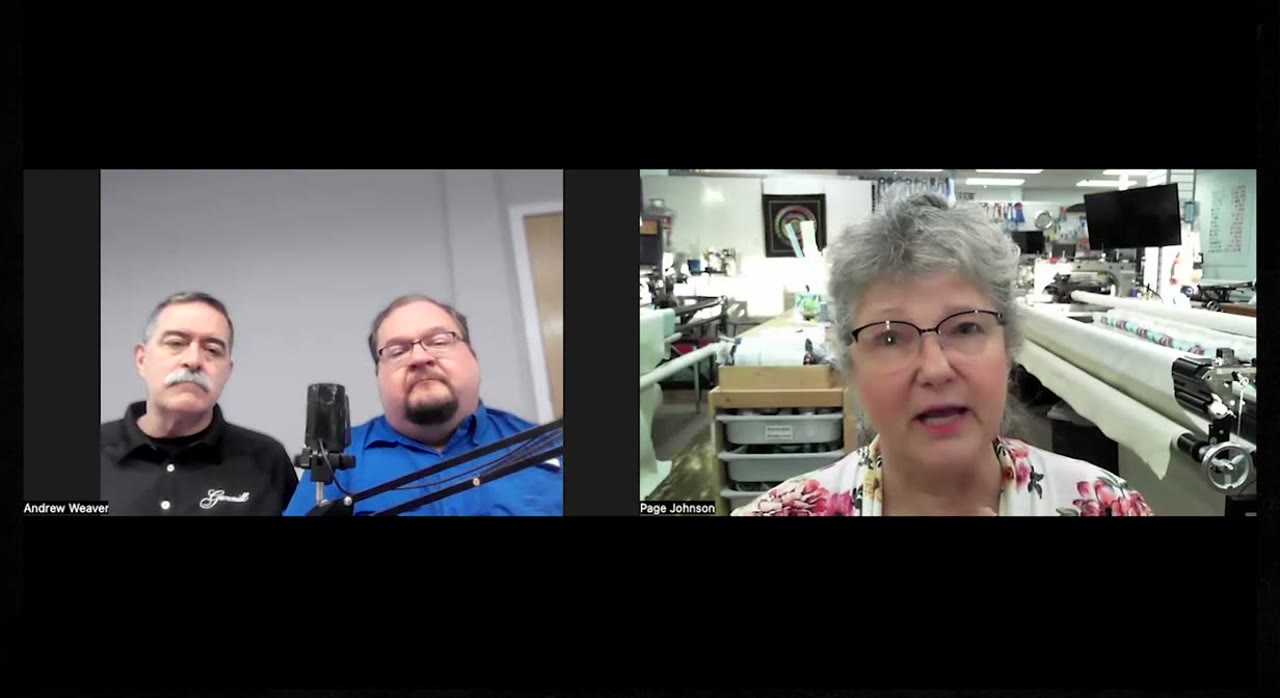
With 18,500 quilts completed over 25 years, Page has honed her workflow to a science. She tracks every movement, standardizes her intake process, and keeps tools duplicated and within easy reach. “It is being consistent, shaving off time over what you do or finding a system that works… I started tracking my movements and saying, I’m always going to do this. I’m always going to do that. I turned into a robot”.27:51
Her intake process is highly organized: “We measure the top. We fold everything in quarters. I measure it with a long tape measure so it’s only half the quilt. And then I fold the tape measure in half so I’m not trying to add or making a mistake in adding… I have all the details before I move to the computer”.30:41
To streamline customer choices, she uses a second monitor at the front counter to display curated design options, grouped by style (geometric, feather, flower, etc.). This reduces decision fatigue and keeps appointments efficient. “I have all the details before I move to the computer. And I have put on our front counter a second monitor that shows… an intake project… and it has geometric, feather, flower, leaf, animal, kids, curl, basics, circle, star, holidays, hearts…”.31:29
She also stresses the importance of optimizing every step, from where tools are stored to how batting is managed, and encourages quilters to constantly evaluate and improve their systems. “Efficiency is a key thing, would you say, for somebody who is starting out? Absolutely. Use the same movements and have all your tools, have duplicate tools. Have them in the same spot all the time”.29:56
“It is being consistent, shaving off time over what you do or finding a system that works... I started tracking my movements and saying, I'm always going to do this. I'm always going to do that. I turned into a robot.”
Investing in Machines, Supplies, and Education
Page’s growth has been fueled by steady reinvestment. She started with one machine, added a Statler in 2006, and expanded to five machines as demand grew. “The second machine I did borrow money for, but the third, fourth, and fifth, I had set aside every step of the way. And the fourth and fifth came very quickly, because I could see that I really had the business. And by learning more, the quality of everything I did went up”.19:36
She now stocks 900 thread colors, 10 types of batting, and over 350 wide backings, giving customers a one-stop shop. “I now have 900 colors of thread, and so I have options. I started with one roll of backing, and when you sell it, you get enough money to buy two. And so I did put money back into my business, and I did set aside every month money”.18:29
Education is a cornerstone of her business. Page takes at least 48 hours of classes a year, often far exceeding that, and insists on applying new techniques immediately: “I would write down everything I did, and I would pick five things that I would go home and use on a quilt within the first two weeks, because if I didn’t use it, I’d lose it. And education is what catapulted my skills, but I had to use it”.15:10
She encourages other quilters to view time spent learning as an investment in the future: “My time I spend today is an investment in my future. I took classes. I have pushed myself to learn it. And I can do that much quicker. And I’m not doing that design for one person. Chances are, I’m going to use it over and over and over again, because it works”.35:23
Revenue, Reinvestment, and the Realities of Profit
Page reports that her business is on track for $250,000 in revenue this year, but she is candid about reinvesting much of it back into the business—on machines, supplies, and even a company vehicle. “When it all comes down to the end, I don’t really make too much because I put a lot of that back into the business”.25:22
She notes that moving from home to a storefront brought new costs like insurance and payroll, and she recommends using professionals for payroll and taxes to avoid headaches. “Some of the costs of taking your business out of the home, that I didn’t really consider all that. Like, whereas we had insurance at home… but you need more insurance. And then when you start having people come in, you need riders on that. And hiring staff, I use a third party payroll system… I leave it to the professionals”.48:39
Page’s business model is full-service: “We do everything from your first baby quilt up to you want to go to Paducah and we do binding and backings and you found blocks that your grandma did in the attic and we’ll put them together in a top and finish it. I do a lot of vintage stuff as well”.25:49
She also tracks her output meticulously: “I am at eighteen thousand five hundred at this point. Total. And that doesn’t include donation quilts or staff quilts. That’s just the invoice numbers”.27:03 Her approach to reinvestment and careful tracking provides a realistic view of the financial side of a growing longarm business.
Giving Back: Community and Donation Quilts
Beyond business, Page’s shop is a hub for giving back. Her team produces around 100 donation quilts a year for local organizations serving children, veterans, and the homeless. “It’s my ministry. I give back that way, and that’s what a lot of the people come in here on weekends. That’s what I’m doing on the weekends. We’re quilting the tops”.41:27
She organizes fabric donations, kits, and a community of volunteers who help assemble and quilt these gifts, making it a central part of her shop’s culture. “What we have now is when the bins come in, I have probably 50 different bins, and they’re sorted by kid fabric, colorways, and we’ll get a pattern. And one of the village people, because we have a village that does this, they’ll go around and select fabrics and make kits and even pre-cut many of the kits”.42:35
Page is clear about her donation policy: “People will come in, customers, and say, well, this is a donation quilt. And I’m very clear. I choose my donations. You get to choose yours. And if you want me to quilt it, there is no discount. If it’s for another donation, then that’s fine. They can do that. But it’s not my donation. The donation quilts are only run on the quilts on the weekends”.44:33
This spirit of generosity and community is woven into the fabric of her business, providing both a sense of purpose and a way to bring people together.
“The overall designs pay my bills, but the custom stuff feeds my soul and my purpose.”
Advice for New Longarm Quilters: Start Where You Are
For those just starting out, Page’s advice is practical and encouraging: “You don’t need five. Get to where you want to be and be comfortable with it… I’m at a point where I’m happy. I’m comfortable. I’m making an impact on the friends that I have. And together, we’re all making an impact in the community and helping out there. You gotta try it. And it is scary… you just gotta walk through the fear, walk through the fear”.50:57
She stresses the importance of being intentional about every step, from workflow to customer interaction, and not being afraid to promote yourself—even in the grocery store line. “Getting past that, I found a customer in the, uh, checkout line at the grocery store, have your business cards on you at all times… Oh, are you a quilter? Yeah. Yeah. You just gotta walk through the fear, walk through the fear. Moving out of the house was the biggest, scariest thing for me”.51:31
Page also encourages new longarmers to define their own version of success. “A lot of people buy these machines thinking I’m going to run a business and they get to the point where they paid it off. And then they say, no, it’s just for me and my friends. And if that’s where you want to be, that’s fine. I just kept pushing myself because I was having way too much fun”.52:53
Ultimately, she says, the business should fit your life and make you happy. “Yeah, you got to do what makes you happy. You know, life is too short”.53:10
“You don't need five. Get to where you want to be and be comfortable with it... I'm at a point where I'm happy. I'm comfortable. I'm making an impact on the friends that I have.”
“You gotta try it. And it is scary... you just gotta walk through the fear, walk through the fear.”
Questions this interview answers
How much should I charge for edge-to-edge longarm quilting?
Page Johnson charges about 2.3¢ per square inch (roughly $30 per square yard) for edge-to-edge quilting, including thread, batting, and setup. She notes that this is on the lower side for her metro area, with some competitors charging up to 3¢ per square inch.23:52
How did Page Johnson grow her quilting business?
She started in her basement, joined guilds, used creative self-promotion, and later moved to a storefront as business grew. She reinvested profits into more machines and supplies, and built a team of 12 employees to keep up with demand.2:29
What advice does Page have for new longarm quilters?
Start with what you have, focus on efficiency, and don’t be afraid to promote yourself. Page emphasizes being intentional about workflow, taking classes, and not letting fear stop you from growing your business.50:57
How does Page handle intake and workflow for so many quilts?
She uses a standardized intake process: measuring, folding, and organizing each quilt and backing, then showing curated design options on a monitor to keep appointments efficient and reduce decision fatigue.31:29
Does Page offer discounts for donation quilts?
No. She is clear that she chooses which quilts are shop donations, and if a customer wants her to quilt a donation, it is at the regular rate. Her team does shop donation quilts on weekends, often with staff learning new skills in the process.44:33
Source
This article was written from Episode 60 of Quilting Business Success with Page Johnson. Quotes are verbatim and link to the moment in the recording. Full transcript · Markdown version.