

Key takeaways
- Thorough research and a detailed business plan are crucial before investing in equipment and space.
- Building a dedicated quilting studio requires more decisions and work than most anticipate.
- Edge-to-edge quilting forms the bulk of early business, with rates starting at 2¢ per square inch and all thread/batting included.
- Balancing a new business with a full-time job means starting with manageable client volume and hours.
- Social media and marketing can be a major challenge for new business owners.
- Support from mentors, friends, and family is invaluable during the startup phase.
The numbers
| Metric | Value | Basis | Note |
|---|---|---|---|
| Pricing | |||
| Edge-to-edge rate | 2 ¢/sq in | 24:36 | Lisa's starting price for edge-to-edge is 2 cents per square inch |
| Thread and batting charges | I don't charge for any of that because I feel like I'm giving somebody a service, and I couldn't do that service without needle and thread. For me, it seems like it should be all included. | 25:13 | Lisa includes thread, needles, bobbins, and loading in her base price; no extra charge |
| Volume and capacity | |||
| Quilts per year | 52–104 quilts | 20:28 | Lisa does 1-2 customer quilts per week |
| Backlog / waiting list | 0 quilts | 20:15 | Lisa says she does not have a queue/backlog for customer quilts |
| Edge-to-edge share of work | 100 % | 22:52 | Lisa says all her client quilts are edge-to-edge right now |
| Time | |||
| Quilting hours per week | 15–20 hours | 22:18 | Lisa works 15-20 hours per week on customer quilting |
| Money | |||
| Annual earnings (est.) | $9,400–$18,700 | estimate | quilts per year x edge-to-edge rate x 9000 sq in (queen); at 15–20 hours a week |
| Effective hourly rate (est.) | $10–$26/hr | estimate | annual earnings (est.) / (15–20 hours a week x 48 weeks); wide because both inputs are ranges |
| Equipment | |||
| Machine (model, throat, table) | Gammill Statler with Ascend retrofit, color purple | 6:39 | Purchased used Gammill Statler, retrofitted with Ascend |
| Number of machines | 1 | 6:39 | Lisa runs one longarm machine |
| Studio size | 1,200 sq ft | 7:26 | Studio is a 30x40 ft metal building |
| Business profile | |||
| Years in business | 1 year | 8:12 | Lisa started her business January 1st of the current year |
| Years quilting | 20 years | 1:22 | Lisa started longarming about 20 years ago |
17 other metrics were not covered in this interview
- Custom rate
- Queen-size price, edge-to-edge
- Queen-size price, custom
- Average price per quilt
- T-shirt quilt price
- Turnaround time
- Time per quilt, edge-to-edge
- Time per quilt, custom
- Mail-in share
- Hourly rate (stated)
- Annual revenue (stated)
- Worst year revenue
- Lifetime revenue per machine
- Machine cost
- Machine payback (stated)
- Machine payback (est.) (have: annual earnings (est.) $9,400–$18,700; missing: machine cost)
- Customers
What the numbers say
What the numbers say
The available figures show that Lisa’s quilting business is focused entirely on edge-to-edge quilting, with a stated rate of 2 cents per square inch,24:36 and all client quilts currently falling into this category.22:52 There are no extra charges for thread, needles, or loading, as Lisa includes these in her base price.25:13 This means pricing is straightforward for customers, but the lack of surcharges may limit per-quilt revenue.
In terms of capacity, Lisa completes between 52 and 104 quilts per year, working 15–20 hours per week on customer projects,20:28.22:18 She operates a single longarm machine in a 1,200 sq ft studio,6:39,7:26 and reports no backlog or waiting list,20:15 suggesting that current throughput matches demand. Estimated annual earnings, based on the edge-to-edge rate and assumed queen-size quilts, range from $9,400 to $18,700. This translates to an effective hourly rate of $10–$26, depending on the number of quilts and hours worked. These estimates rest on the assumption that all quilts are queen-sized (9,000 sq in), which may not reflect actual quilt sizes or pricing.
Key figures such as custom pricing, average quilt size, actual time per quilt, and machine cost are missing or unclear. As a result, it’s not possible to analyze profitability, payback period, or the impact of different quilt types. The available data provides a rough sense of capacity and pricing for edge-to-edge work, but leaves most financial and operational metrics open to question.
From Hobby to Business: The Decision to Start
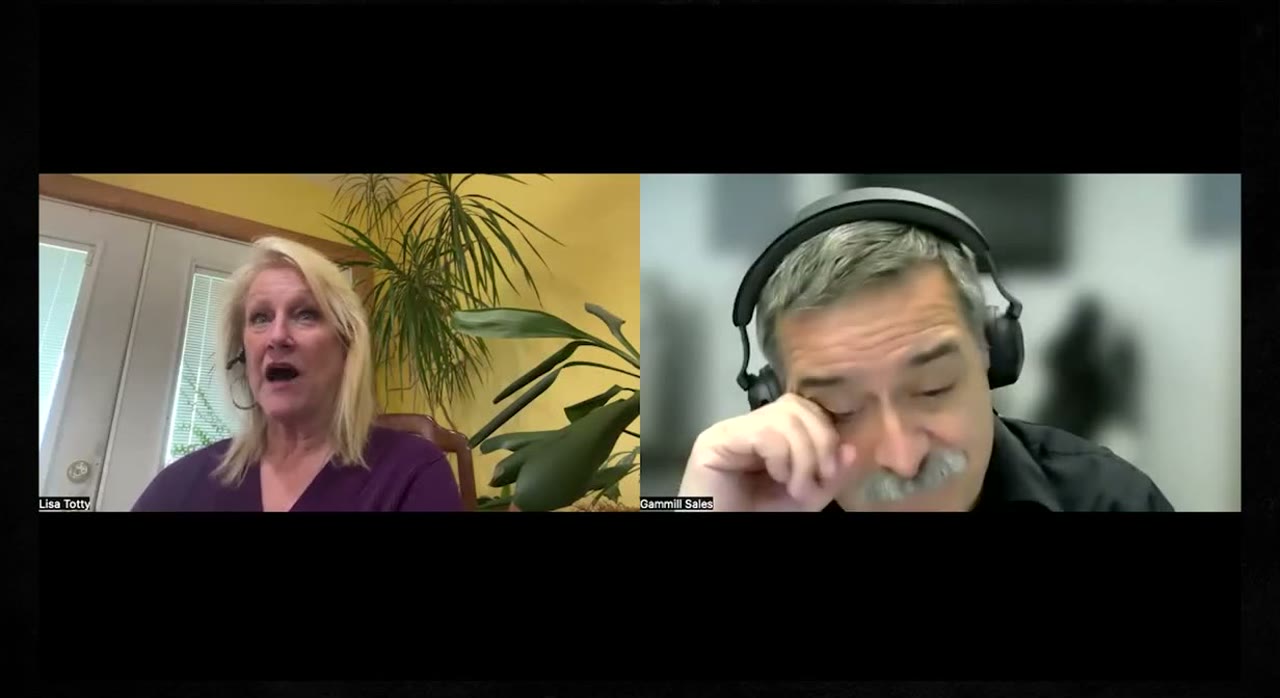
For Lisa Totty, starting a longarm quilting business was the culmination of over 20 years of quilting, much of it on borrowed or shared machines. Living on 80 acres near Morris, Oklahoma, Lisa quilted with friends and local mentors, but always felt like a guest in someone else’s studio. “But when you’re the borrower of a long arm, you always feel like you have to hurry up and get it done… I never was able to be creative like I want to be”.4:45
The idea of owning her own longarm seemed out of reach until encouragement from her friend Sonia, who kept telling her, “buy a Statler, Lisa, you can do it. You can make it work”.5:05 The turning point came at a Quilting with Confidence event, where Lisa spotted a purple Gammill Statler for sale online. Despite not having a studio or even a space to put it, she bought the machine and drove to Wichita, Kansas to pick it up herself, just days after her husband’s knee surgery.6:39 “And then I still didn’t have a studio. I had no place to put her, nowhere to put her… what do I do?”.6:54
Lisa’s leap of faith was motivated by her upcoming retirement from a career in the financial industry and a desire for a fulfilling, creative pursuit in her next chapter. “I’m getting ready to retire from my corporate job… I’m a little bit anxious about having a fixed income. So that’s why I wanted to start a business”.8:55
“I never thought I could afford a long arm and Sonia, bless her heart, she was the best support system in this area because she kept saying, buy a Statler, Lisa, you can do it.”
Studio Build: Planning, Challenges, and Surprises
After purchasing her longarm, Lisa and her husband faced the challenge of where to house it. “We probably had a hundred conversations. Do we build a standalone building? Do we buy a portable building to put her in? Do we add on to the house?”.7:03 They ultimately decided on a 30 by 40 foot metal studio, breaking ground in August and racing to finish by December for a scheduled retrofit.
Lisa describes the process as far more involved than she’d imagined. “I was constantly making decisions about…the fixtures and the lighting and yeah, it’s a lot of work building something. A lot of details that do not occur to you when you’re in the process”.13:56 The studio, at 1,200 square feet, now serves as both her business headquarters and creative sanctuary. She shares that the studio is not just for her: “My goal is to educate. My goal is to have quilting classes in my studio. And I already work with our county 4-H sewing group. I meet with them once a week with a really, really experienced sewer named Valerie, and we teach the children to sew. They quilt some, they sew mostly”.36:43
Lisa is still working on landscaping and access to her studio, preferring to meet most clients in town or at neutral locations until the space is fully ready for visitors.43:02
Research and Business Planning: Doing the Homework
Lisa’s approach to starting a longarm quilting business was deliberate and research-driven. She joined two local quilt guilds, surveyed the number of longarmers in her area, and asked established business owners about their customer loads and turnaround times.11:30 “I checked all the quilt guilds in my area to see how many long armers there were. I asked a lot of people that were already in business, what their turnaround time is. I actually did a whole business plan…”.11:23
A key resource was the SCORE program, which she learned about from another podcast guest. “I reached out to a score mentor in Tulsa and he helped me write a business plan, which is how I got a business loan. And I have to say, when I went into the bank to talk to our banker, he looked at my business plan…and he said, can I keep this? I haven’t had a business plan written this well since I’ve been at this bank”.12:31
Lisa’s 14-page plan covered basics like local demand, competition, and financial projections, giving her the confidence to invest in equipment and construction. She also keeps detailed notes on pricing and marketing ideas from podcasts and books: “I have an app on my phone…and I write down anything pertinent. I write down every time you have a podcast, where they’re from, how much they charge, what they do for advertising. That has been a gold mine”.27:07
“I checked all the quilt guilds in my area to see how many long armers there were. I asked a lot of people that were already in business, what their turnaround time is. I actually did a whole business plan...”
Setting Prices and Services: Keeping It Simple
Lisa’s pricing strategy for her longarm quilting business is intentionally simple and transparent. “My price starts at two cents a square inch. Then depending on if they wanted a really densely quilted pattern…I might charge more for that”.24:40 She currently does not charge extra for thread, batting, or needles, believing these are essential to the service: “I don’t charge for any of that because I feel like I’m giving somebody a service, and I couldn’t do that service without needle and thread. For me, it seems like it should be all included”.25:13
At this stage, all of her client work is edge-to-edge quilting, which she acknowledges is the bread and butter for most new longarm businesses. “My client quilts are basically all edge to edge right now. I want to make sure I get enough custom quilts with my machine…so that I feel really comfortable. Most people that spend the money for custom work, need it to be pretty perfect. I want to make sure that I can make it pretty perfect before I start offering that service”.22:52
Lisa is considering adding T-shirt quilts and other services in the future, but wants to practice on family projects first: “I have two boxes of my two sons’ T-shirts that I’m going to work on before I start saying that I offer that. They are very popular here”.26:12 She’s also inspired by other quilters’ marketing ideas, like branded bags for quilt delivery, which she adapted after hearing about it on a podcast.27:31
“My price starts at two cents a square inch. Then depending on if they wanted a really densely quilted pattern...I might charge more for that.”
“I don't charge for any of that because I feel like I'm giving somebody a service, and I couldn't do that service without needle and thread. For me, it seems like it should be all included.”
Workflow, Capacity, and Balancing with a Day Job
Lisa runs her longarm quilting business part-time while still working in the financial industry. She quilts 15–20 hours a week, mostly on weekends and some evenings, averaging one to two client quilts per week.22:21 “Right now, I’m keeping up. I don’t have a queue. I work in the evenings and weekends. I would say mostly I work on the weekends. If we’re planning to go somewhere or do something on the weekend, I’ll work during the evening. I do one to two quilts a week for clients”.20:12
This manageable pace allows her to keep up with customer demand and also make progress on her personal backlog of 44 quilt tops, accumulated during years without her own longarm.20:46 Lisa estimates her annual earnings at $9,400–$18,700, translating to an effective hourly rate of $10–$26 per hour, depending on volume.22:21 She’s content with this as a starting point and sees it as a foundation for post-retirement growth.
Lisa’s workflow is evolving as she becomes more comfortable with her machine and business processes. She’s also learning to balance her creative ambitions with the realities of customer expectations and time constraints, especially as she plans to add more custom work in the future.
Marketing and Social Media: A Work in Progress
Despite her thorough research and operational readiness, Lisa finds marketing to be her biggest challenge. “Social media…I am not a poster, and I’m not a, I don’t know how to use it to grow my business. When I try to think of a post to say something exciting like I see on other people’s business pages, yeah, my mind just draws a blank”.33:23
She’s seeking help connecting her Instagram and Facebook accounts and welcomes advice or referrals for affordable web design. Lisa is also exploring free resources like her state’s small business development center, which helped her with her business plan and financial projections.21:34
In-person networking is another key strategy. Lisa introduces herself at local embroidery shops, gives out business cards, and participates in quilt guilds and fairs. “I went to our local embroidery shop to introduce myself and give her a couple of my cards and things like that, and that was the first question she asked me. She said, everybody who comes in here wants to know if I do T-shirt quilts, and I don’t”.26:32
She’s inspired by the stories and marketing ideas of other quilters, noting that “everything I’ve gotten has been because of this podcast. It’s wonderful”.30:32
“Social media...I am not a poster, and I'm not a, I don't know how to use it to grow my business. When I try to think of a post to say something exciting...my mind just draws a blank.”
Learning, Mentors, and Community
Lisa credits much of her progress to a support network of mentors and friends: “Obviously, my husband has been a rock…Sue, who worked with me and got me started long arming…Sonia, who graciously let me use her Statler anytime I needed it…and then the last one is Mary Penner. And she should be on this podcast. She’s been quilting long arm forever. She is a wealth of knowledge”.35:43
She also draws inspiration from books, podcasts, and other quilters’ stories. Lisa carried Shelly Pagliai’s book, ‘Quilting for Hire,’ everywhere for six months while planning her business, calling it “a wealth of knowledge and it’s a very well written book”.40:16
Lisa is passionate about passing on the craft, volunteering with her local 4-H sewing group and hoping to host classes in her studio. “I want to see children sew and quilt. I don’t want that art to die”.37:20 She’s encouraged by the younger generation’s interest in quilting and believes community is key to sustaining the craft.
Advice for New Longarm Quilters
Lisa encourages would-be business owners to do their research, seek mentorship, and not fear market saturation: “I felt like if you are good at a skill, there’s always business. To me, I don’t think there’s ever a saturated market”.10:58 She recommends SCORE and local small business development centers for free resources, and emphasizes the importance of finding your own creative voice: “If you find a style that really suits you, people will find you because they see your work and they see the things that you’ve done and that’s the type of quilting that they want”.46:23
Above all, she highlights the peace and fulfillment that comes from working in her studio: “No matter how bad things are going that day…I’m still at peace. It’s the most peaceful place in the world, my studio”.42:23 Lisa’s story is a testament to the value of preparation, community, and following your passion when starting a longarm quilting business.
“No matter how bad things are going that day...I'm still at peace. It's the most peaceful place in the world, my studio.”
Questions this interview answers
How did Lisa Totty research the market before starting her longarm quilting business?
Lisa joined two local quilt guilds, asked established longarmers about their turnaround times, and checked how many longarmers were active in her area. She also wrote a detailed business plan with help from a SCORE mentor in Tulsa, which helped her secure a business loan. 11:30
What does Lisa charge for edge-to-edge quilting?
Lisa charges 2¢ per square inch for edge-to-edge quilting, with possible increases for dense patterns. She does not charge extra for thread, batting, or needles, preferring to keep her pricing simple and inclusive. 24:40
How many quilts does Lisa complete per year, and how much time does she spend quilting?
Lisa quilts one to two client quilts per week, totaling 52–104 quilts per year. She spends 15–20 hours per week quilting, mostly on weekends and evenings while still working a full-time job. 22:21
What advice does Lisa have for new longarm quilting business owners?
Lisa recommends thorough research, seeking out mentors, and using resources like SCORE and small business development centers. She believes that if you are good at your craft, there will always be business, and encourages others not to fear market saturation. 10:58
What has been Lisa’s biggest challenge in starting her business?
Lisa finds social media and marketing the most difficult part, as she is not naturally inclined to post or promote herself online. She is actively seeking help in this area. 33:10
Source
This article was written from Episode 63 of Quilting Business Success with Lisa Totty. Quotes are verbatim and link to the moment in the recording. Full transcript · Markdown version.