

Key takeaways
- A detailed business plan—even if daunting—can clarify your market, customer needs, and setup requirements before you invest in equipment.3:02
- Starting with no customers, Robin used creative grassroots marketing and guild involvement to build her client list.18:03
- Joining quilt guilds and focusing on customer relationships were key to her business growth and word-of-mouth referrals.18:36
- Robin prices edge-to-edge quilting at 2¢ per square inch, includes thread, and only charges extra for variegated thread.30:26
- Having multiple machines allows her to balance fast-turnaround edge-to-edge work with slower custom projects.26:59
- Listening to customers, offering guidance, and being generous with service builds loyalty and repeat business.41:35
The numbers
| Metric | Value | Basis | Note |
|---|---|---|---|
| Pricing | |||
| Edge-to-edge rate | 2 ¢/sq in | 30:26 | Robin's starting edge-to-edge rate; 2¢/sq in, goes up for density |
| Thread and batting charges | My fees include thread. I don't charge extra for thread or bobbins. Only variegated thread is extra. Batting is sold; she buys wholesale and stocks multiple types. | 46:06 | Thread included except variegated; batting sold, multiple types |
| Volume and capacity | |||
| Edge-to-edge share of work | 95 % | 29:15 | Robin: 95% edge-to-edge, 5% custom |
| Time | |||
| Quilting hours per week | 35 hours | 26:10 | Robin: about 35 hours/week on the business |
| Money | |||
| Worst year revenue | $6,000 | 39:26 | Robin: first year revenue was $6,000 |
| Equipment | |||
| Machine (model, throat, table) | Three Gammill longarms: Vision (22" head, 12' frame), two 30" head Gammills (Statler computerized). | 10:40 | Vision 22"/12', two 30" Gammills, Statler computerized |
| Number of machines | 3 | 14:04 | Robin currently runs 3 longarms |
| Business profile | |||
| Years in business | 12 years | 2:03 | Robin: on her 12th year in business |
22 other metrics were not covered in this interview
- Custom rate
- Queen-size price, edge-to-edge
- Queen-size price, custom
- Average price per quilt
- T-shirt quilt price
- Quilts per year
- Backlog / waiting list
- Turnaround time
- Time per quilt, edge-to-edge
- Time per quilt, custom
- Mail-in share
- Hourly rate (stated)
- Annual revenue (stated)
- Lifetime revenue per machine
- Annual earnings (est.) (have: edge-to-edge rate 2 ¢/sq in; missing: quilts per year; or, alternatively, have: quilting hours per week 35 hours; missing: a stated hourly rate)
- Effective hourly rate (est.) (have: quilting hours per week 35 hours; missing: annual earnings (est.))
- Machine cost
- Machine payback (stated)
- Machine payback (est.) (missing: machine cost and annual earnings (est.))
- Studio size
- Years quilting
- Customers
What the numbers say
What the numbers say
The available figures provide only a partial picture of this quilting business’s operations. The business charges a starting rate of 2¢ per square inch for edge-to-edge quilting, with higher rates for denser patterns.30:26 Thread is included in the base fee except for variegated thread, and batting is sold separately, with multiple types stocked.46:06 Custom quilting rates, average prices, and specific project quotes (such as for queen-size or T-shirt quilts) are not disclosed, so it is not possible to estimate typical customer spend or revenue per job.
Capacity is suggested by the use of three Gammill longarm machines—one Vision (22” head, 12’ frame) and two 30” Statler computerized models,10:40 with Robin working about 35 hours per week on the business.26:10 However, without data on quilts completed per year, turnaround time, or time per quilt, throughput and actual capacity remain unclear. Edge-to-edge quilting accounts for 95% of the workload,29:15 indicating a focus on higher-volume, standardized work rather than custom projects.
Financial performance is largely opaque. The only concrete revenue figure is the first-year total of $6,000,39:26 with no information on subsequent years, current annual revenue, or earnings. Machine costs and payback periods are also not stated, so it is not possible to assess return on investment. In summary, while the business appears to be well-equipped and focused on edge-to-edge quilting, key metrics on pricing, throughput, and financial performance are missing, limiting any firm conclusions about its capacity or profitability.
Starting a Longarm Quilting Business in Rural Ohio
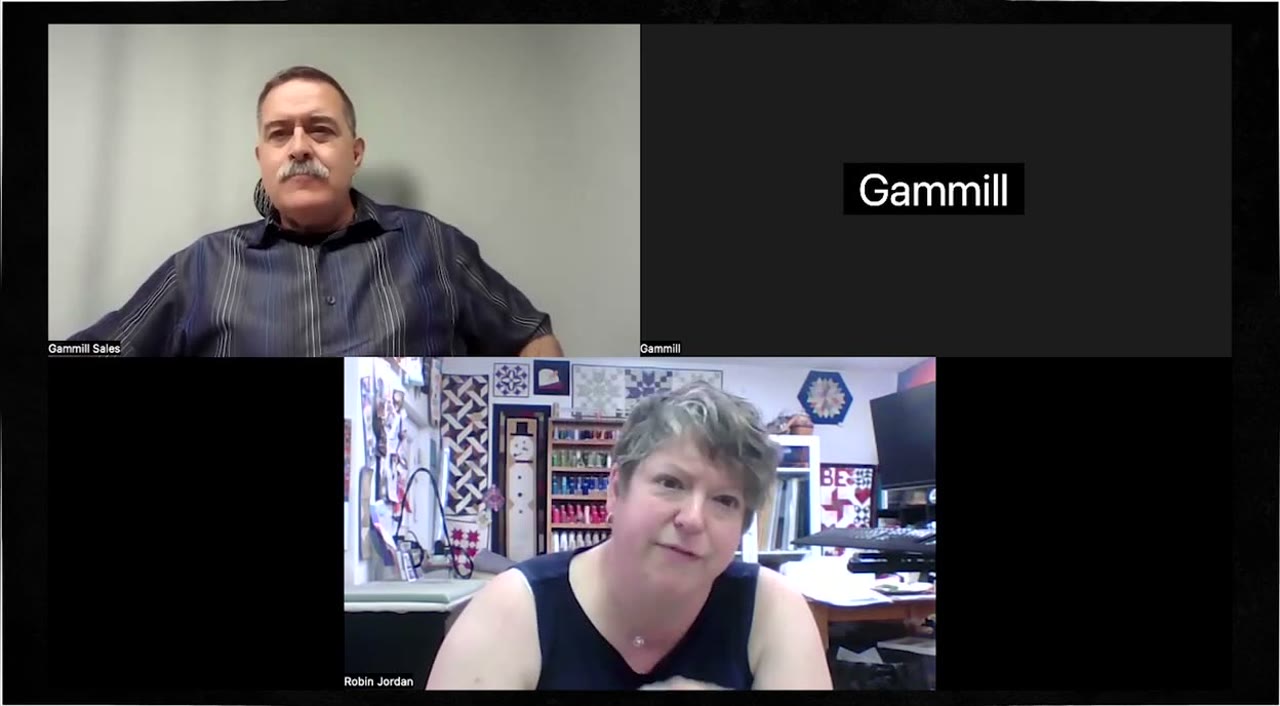
When Robin Jordan decided she wanted to start a longarm quilting business, she was living on 11 acres in Mount Gilead, a small town in central Ohio—“just north of Columbus, just south of Cleveland”.0:39 She had no customers, but saw an opportunity: “I had zero customers. Zero. So how’d you get them? I did lots of things”.17:42 Robin’s story is a practical guide for anyone considering starting a longarm quilting business, especially in a rural area. Her journey began with a business plan, a single machine in her dining room, and a determination to create a flexible, family-friendly career.2:09
Robin had worked as a librarian and enjoyed the creativity and community of that role, but wanted a business that would allow her to be present for her children: “It was either go back to work or find a job. I had an idea and my husband, he entertained my idea with a little persuading, so it was good”.2:09 The rural setting posed its own challenges, but Robin saw the potential for a quilting business that could serve a wide area, even if it meant customers had to drive a bit: “Most of my people are probably within an hour of me. So I do get some Columbus traffic. I get a lot of Mount Vernon, Mount Gilead, Marion, Mansfield. It just kind of just depends where they hear about me and if they have a long armer in their area”.40:55
“I had zero customers. Zero. So how'd you get them? I did lots of things.”
The Power (and Pain) of a Business Plan
Robin’s husband, a CFO, insisted she write a business plan before investing in a longarm. “He made me do a business plan. It was 54 pages. I hated every minute of it, but… it was the best thing I ever did”.3:02 The process forced Robin to research her market, understand her potential customers, and even rethink her studio location: “I had originally thought the business might start in my basement, but looking at my customer age, I’m like, they can’t do stairs”.3:30
This planning helped her avoid costly mistakes and set her up for success. She learned that many of her potential customers were older and accessibility would be crucial. That insight led her to eventually build a dedicated barn studio on her property, rather than using a less accessible space in her home: “About eight years ago we built a barn with a space for my quilt shop… it’s right across my driveway so it makes it very convenient for my commute is pretty short”.22:48
Robin also credits the business plan with helping her understand the financial realities of starting a quilting business: “They’re a chunk of change, they’re an investment, but they are workhorses. I did my research on different machines and it helped that I learned on a Gammill, but the machines, they are tanks. They are very well designed. They are great. I just love them”.8:32
“He made me do a business plan. It was 54 pages. I hated every minute of it, but... it was the best thing I ever did.”
Choosing and Financing Her First Machine
Robin started on a Gammill Vision with a 22-inch head and a 12-foot frame, found used in Mississippi. She financed it with a mix of savings and a loan from her supportive parents: “My parents were very big supporters. They lent me the money to get started and they believed in me and away I went”.10:08 Her choice of machine was influenced by hands-on experience at a local shop, as well as the need for durability: “They are designed to be a 30 year industrial machine because being a business… I wanted to be able to have a machine that would go the distance with me”.9:23
Robin’s first machine fit in her dining room, which made it possible to start small and keep overhead low: “It wasn’t too big. It’s only a 12 foot frame, so it would fit in my dining room since that’s where I started. It was the perfect size, perfect everything for me”.11:01 She and her father made a road trip to pick up the machine, underscoring the family support that was central to her launch.
As her business grew, Robin added more machines, but she kept her original Vision for custom work and special projects, including a year-long effort quilting for the Buckeye Boy State veterans’ program: “That Vision for that one year ran nothing but Quilt of Valor… after that year was done, it was already in the shop and we had started to, you know, increase business and the need for it to stay was there. So that’s how we ended up with three machines”.13:32
Growing with Multiple Machines and Workflow
As demand grew, Robin added two more Gammill longarms, both with 30-inch heads and computerized Statler systems. This allowed her to separate edge-to-edge and custom work: “For the most part the two bigger machines with the 30-inch heads they run pantographs non-stop and I use that smaller vision for all of our custom work”.26:59 Having multiple machines means she can keep fast-turnaround jobs moving while custom projects take the time they need: “If it sits on that machine for maybe a week I don’t feel so bad about it”.27:26
Robin works about 35 hours a week and runs all three machines most days, with help from a friend, Susan: “I have a friend that comes in and works with me. She’s awesome… I definitely don’t think I could run three machines as efficiently without her”.26:31 Susan started coming in once or twice a week after retiring, and their teamwork has allowed Robin to increase her output and efficiency: “Being able to help pull a quilt off a machine or cut some batting, those kind of things, you don’t realize how much time they take in a day, but they do add up”.48:30
Robin estimates that about 95% of her production is edge-to-edge quilting, with only about 5% custom work: “I would say 95 edge to edge and maybe 5 custom”.29:15 The division of labor between machines and the addition of help has allowed her to handle hundreds of quilts per year, with business doubling annually for several years: “Every year is doubled, doubled and I’m to the point now where I don’t even know where people are getting my information from”.39:34
“For the most part the two bigger machines with the 30-inch heads they run pantographs non-stop and I use that smaller vision for all of our custom work.”
Building a Customer Base from Zero
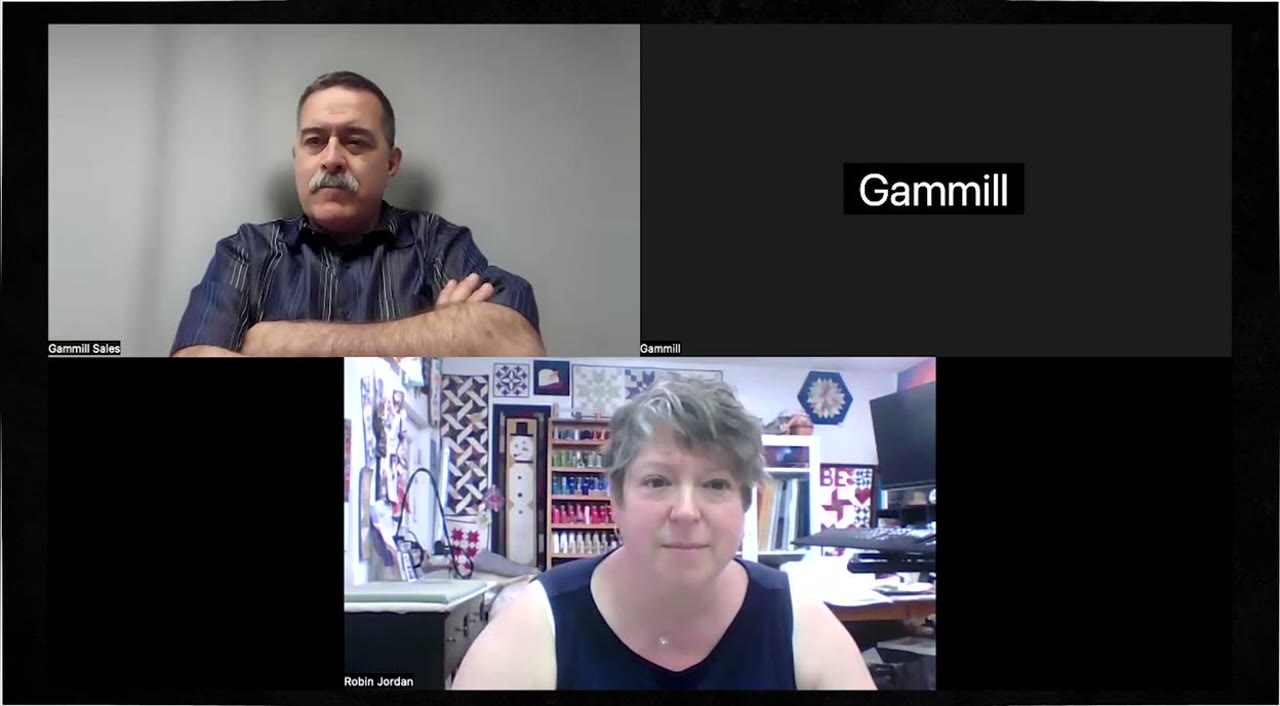
Robin started with no clients and no connections. She hustled: “I would go to dry cleaners, Panera, put up business cards everywhere… I opened every quilting book and put my business cards in it”.18:05 Her background as a librarian helped her get creative with outreach: “I was a librarian at our local library… that’s the reason for the books exactly get away with it”.21:33
But the biggest boost came from joining local quilt guilds: “The biggest thing that got my name out was joining a quilt guild… In my experience, quilters are the best people. They are very friendly, very loving and just genuine, wonderful people”.18:36 Robin found that being patient, showing her work, and building relationships brought in loyal customers over time. She notes that guilds can be competitive if there are established longarmers, but that being respectful and not pushy is key: “You have to know you’re not going to just sweep in and take all the business… quilters are very loyal to their long armors unless… something didn’t go quite the way they like”.20:19
Robin also leveraged social media, which helped her reach a broader audience: “Social media I have a decent following on social media, I did a post on something and it was one of those that kind of blew up… it was a little crazy”.24:16 Over time, word of mouth became her most powerful marketing tool, with new clients coming from referrals and community connections.
“The biggest thing that got my name out was joining a quilt guild.”
Pricing, Services, and Customer Care
Robin’s pricing for edge-to-edge quilting starts at 2¢ per square inch, with more dense patterns costing more. She includes thread and bobbins in her fee, only charging extra for variegated thread: “My fees include thread. I don’t charge extra for thread. I don’t charge extra for bobbins. There are a couple of things, like if you use variegated thread, that’s one of the few things I charge extra for”.46:11 She also offers free quilt trimming and stocks batting and backings, buying wholesale from a distributor to keep costs down: “We trim our quilts for free… I make a run to Toledo about once a month and… we come home with like five rolls of batting and whatever we need… that’s how I keep my costs down” 25:15.46:22
Robin’s approach is to be generous and transparent with her customers: “I’m not a nickel and dime kind of person… those kind of little things where you’re going out of your way and you’re doing little things, those are big for people”.47:12 She also offers a wide range of services, from t-shirt quilts and bindings to quilt repairs: “If it’s quilt related, I’ll do it. We do not hem pants or alterations that people try to get us to do all the time”.31:50
Her philosophy is that quilting is an investment for her customers, and she wants them to get their money’s worth: “Quilting is not cheap and I feel that you should get your money’s worth”.30:14
“My fees include thread. I don't charge extra for thread. I don't charge extra for bobbins. There are a couple of things, like if you use variegated thread, that's one of the few things I charge extra for.”
Customer Relationships and Word-of-Mouth Growth
Robin attributes much of her success to how she treats her customers: “When a customer walks in the door, it’s their quilt and I feel it’s my job to help guide them through that process. I let them be as hands-on or as hands-off as they want to”.41:58 She listens, offers guidance, and gives tips without being critical. This approach has led to strong word-of-mouth referrals: “Every year is doubled, doubled and I’m to the point now where I don’t even know where people are getting my information from… If you get a good couple of really good connector people, it can grow your business huge” 39:34.40:00
Robin takes time with each customer, scheduling by appointment and devoting her full attention: “I try to not schedule more than one customer at a time. When they’re here, I try to devote my entire attention to them. Because sometimes just taking that extra five minutes to talk to them about their day or what’s going on in their life, not only are you helping them out through your business, but you’re building a relationship with them”.45:36
She also encourages customers to reach out for help or advice at any stage of their quilting journey: “If you are working on a quilt and you’re stuck or you have a question, just call me. I will help you. I will try and guide you as best I can. I’m not going to do it for you, but I’m willing to answer questions”.46:55 This generosity and willingness to share knowledge has built loyalty and a steady stream of repeat business.
“When a customer walks in the door, it's their quilt and I feel it's my job to help guide them through that process.”
Lessons Learned and Advice for New Quilting Businesses
Looking back, Robin’s advice is to trust yourself and not let fear hold you back: “Go with your gut a lot. Don’t be afraid… Plan ahead. Definitely planning is good, but there’s always that little voice in you that kind of tells you what you should do”.51:57 She also stresses the importance of honesty and treating people well: “You want to be successful, be reasonable, be honest. Don’t try to hide things… If you’re honest with people and up front, they will be honest with you”.53:10
Robin acknowledges that starting out can be scary and that confidence grows with experience: “I did, but I think I wish I would have had maybe a little bit more to try some different things out of the gate. I was nervous. You’re scared. You don’t know. You just don’t know what you don’t know. Go with your gut. Don’t let the fear overtake you”.52:25
She encourages new longarm quilters to embrace their own style and be patient with themselves and their customers: “Everybody’s on a quilting journey. You don’t start out being great. First quilt I have, it is a dumpster fire, but I still have it to look back”.44:10
Robin’s story shows that with planning, persistence, and a focus on relationships, it’s possible to build a thriving quilting business—even in a rural area, starting from scratch.
Questions this interview answers
How did Robin Jordan find her first quilting customers?
Robin started with zero customers and used grassroots marketing—putting business cards at local businesses and inside library quilting books. However, joining a quilt guild proved the most effective way to build her client base and reputation.18:36
What are Robin Jordan’s rates for edge-to-edge quilting?
She charges 2 cents per square inch for edge-to-edge quilting, with prices increasing for denser patterns. Thread and bobbins are included, and only variegated thread costs extra.30:26
How did Robin decide on her studio location?
Her business plan revealed that many potential customers were older and might have trouble with stairs, so she avoided a basement studio. Eventually, she built a dedicated barn studio on her property for accessibility and convenience.3:30
How does Robin balance custom and edge-to-edge quilting?
She uses her two larger, computerized machines for edge-to-edge work and her smaller hand-guided machine for custom projects, allowing her to keep turnaround times reasonable for both types of work.26:59
What advice does Robin have for those starting a longarm quilting business?
She recommends planning carefully, trusting your instincts, and focusing on honest, attentive customer service: "Go with your gut a lot. Don't be afraid... If you're honest with people and up front, they will be honest with you" 51:57.53:10
Source
This article was written from Episode 37 of Quilting Business Success with Robin Jordan. Quotes are verbatim and link to the moment in the recording. Full transcript · Markdown version.