

Key takeaways
- Running two longarm machines—one for edge-to-edge, one for custom—can dramatically increase capacity and customer satisfaction if your space and workflow are set up right.2:52
- Combining multiple edge-to-edge quilts on a single backing streamlines production and can save time for both you and your clients.8:26
- Offering a Certificate of Authenticity with each quilt adds perceived value and can even help clients with insurance claims.28:05
- Transparent, all-in pricing (including batting, thread, and basic finishing) reduces confusion and builds trust with customers.35:27
- Teaching and working with community groups not only gives back but also brings in new clients and keeps your business visible.39:30
- Personal touches—like labeled bags, care instructions, and free labels for custom quilts—help justify premium pricing and create loyal customers.31:12
The numbers
| Metric | Value | Basis | Note |
|---|---|---|---|
| Pricing | |||
| Thread and batting charges | No separate thread, needle, or trim fee. Batting (80/20) is included in the all-in price unless customer requests a different batting, which may change the price slightly. | 35:36 | explains all-in pricing and what is included |
| Equipment | |||
| Machine (model, throat, table) | Two Gammill Ascend longarms: one 30-inch throat, one 26-inch throat. Previously used a Statler and briefly a small Nova. | 1:55 | describes both machines and prior experience |
| Number of machines | 2 | 1:47 | currently runs two Gammill Ascend longarms |
27 other metrics were not covered in this interview
- Edge-to-edge rate
- Custom rate
- Queen-size price, edge-to-edge
- Queen-size price, custom
- Average price per quilt
- T-shirt quilt price
- Quilts per year
- Backlog / waiting list
- Turnaround time
- Time per quilt, edge-to-edge
- Time per quilt, custom
- Edge-to-edge share of work
- Mail-in share
- Quilting hours per week
- Hourly rate (stated)
- Annual revenue (stated)
- Worst year revenue
- Lifetime revenue per machine
- Annual earnings (est.) (missing: quilts per year and a price (average price per quilt, queen-size edge-to-edge price, or edge-to-edge rate); or, alternatively, missing: hours per week and a stated hourly rate)
- Effective hourly rate (est.) (missing: annual earnings (est.) and hours per week)
- Machine cost
- Machine payback (stated)
- Machine payback (est.) (missing: machine cost and annual earnings (est.))
- Studio size
- Years in business
- Years quilting
- Customers
What the numbers say
What the numbers say
Most key metrics for this quilting business are not disclosed, making it difficult to draw clear conclusions about its capacity, pricing, throughput, or payback. The number of quilts completed per year, turnaround time, average price per quilt, and annual revenue are all listed as “unclear,” so estimates of productivity or financial performance cannot be calculated or even approximated [[t=unclear]].
What is known is that the business currently operates two Gammill Ascend longarm quilting machines, one with a 30-inch throat and one with a 26-inch throat [[t=115]; [t=107]]. This suggests a significant investment in equipment and the potential for substantial throughput, but without figures on quilts produced or hours worked, actual capacity remains unknown. The business also uses an “all-in” pricing model for materials: there are no separate charges for thread, needles, or trim, and standard batting is included in the quoted price, with only minor adjustments if a customer requests a different batting.35:36 This approach may simplify pricing for customers, but the actual rates charged are not specified.
Because both machine cost and annual earnings are unclear, it is not possible to estimate payback period or effective hourly rate. In summary, while the business appears to be professionally equipped and offers transparent material pricing, the lack of concrete figures on volume, pricing, and revenue means that its financial and operational performance cannot be meaningfully assessed from the available data.
Finding the Right Machines for Your Business
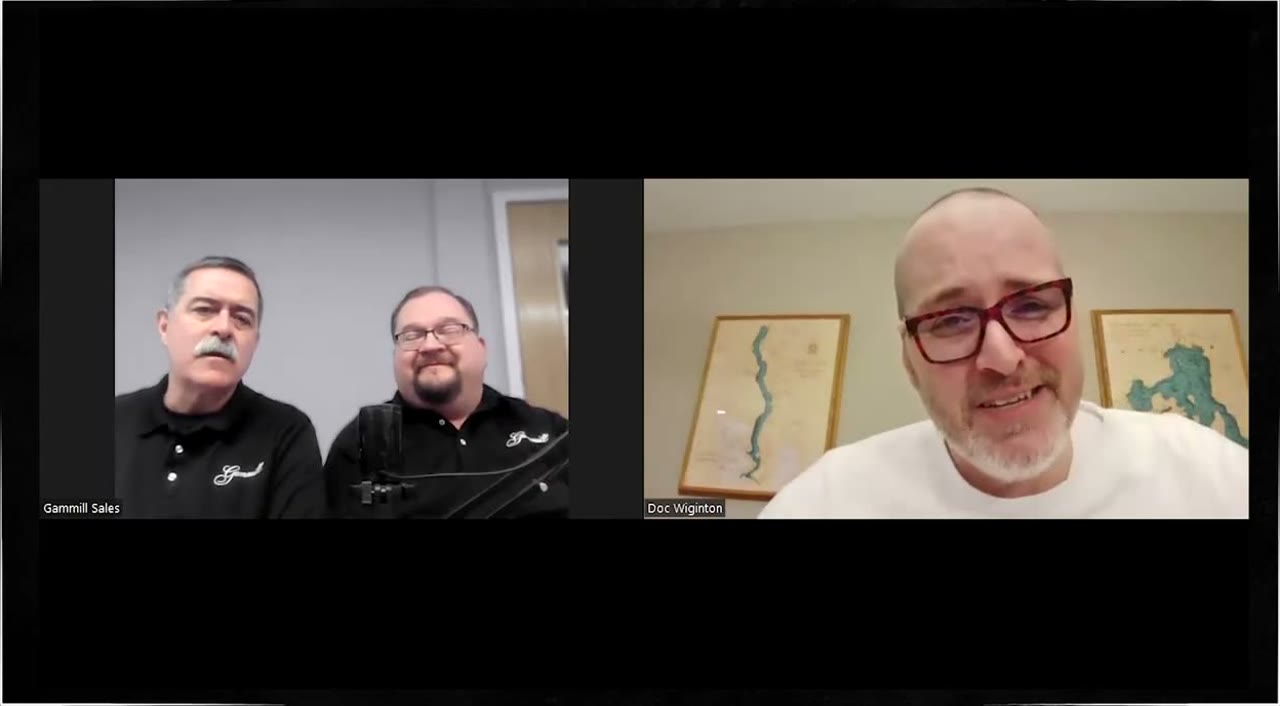
When starting a longarm quilting business, the choice of machine can shape your entire workflow and customer experience. Doc Wiginton describes his journey through several brands before settling on two Gammill Ascend longarms: a 30-inch for edge-to-edge work and a 26-inch for custom pieces. “Once you’ve found it, you can’t go back to anything else. It’s too good,” he says of the Ascend, noting the accuracy and speed that made it indispensable for his custom work.1:11
Doc’s decision to purchase a second machine was driven by the constant bottleneck between custom and edge-to-edge jobs. Before the second machine, custom clients would have to wait for him to finish a backlog of edge-to-edge quilts, and vice versa. “It was always that tension in my studio. And having the two machines has really solved that. It’s made my customers a lot happier and I am able to do more quilts now. So that’s been really great,” he explains.2:52
He also shares that not every machine is created equal. After briefly trying another brand to help a friend and save money, he found it slowed him down: “It was supposed to speed up my process, and all it did was slow me down. The little things that I took for granted on my Statler, accuracy, chief among them, speed… I was just wasting a lot of time on that kind of stuff, and also just on stitch quality, like consistent stitch quality”.12:39
Doc emphasizes that the right machine is a foundational investment, and that the dollars and cents made sense for him: “Two machines sounds crazy. I mean, it’s a lot of money. It’s a lot of space. It’s a big commitment to have two machines. I get it. But I knew the dollars and cents made sense. I needed to speed up. And I knew that my machine would pay for itself. My first machine doesn’t owe me any money. Why would the second machine owe me any money?”.16:35
Setting Up a Studio for Two-Machine Workflow
Running two longarm machines at once is not just about owning the hardware—it’s about optimizing your space and routine. Doc arranges his studio so both machines are within arm’s reach, with computers on opposite sides, making it easy to monitor both simultaneously. “They’re both within my eyesight at the same time. So if there’s a problem, I can stop it pretty quickly,” he explains.4:06
He likens his setup to a V-shaped galley kitchen, allowing him to respond quickly to any issues without breaking his creative flow. This layout means he doesn’t have to walk around machines or lose time between tasks. He also preps multiple bobbins and plans edge-to-edge patterns for maximum efficiency, staying in the creative zone as much as possible.5:16
Doc notes that the rhythm of working between the two machines keeps him physically active and mentally engaged: “It does keep you moving. Your legs don’t get sore from sitting too long. And of course the custom quilts, those, you know, I might work on one pass or one chunk for a long time. And so once it’s loaded, sometimes in my studio for a couple weeks or better. So that’s not so bad”.5:23
He admits that the hardest days are when both machines need to be loaded at once, but the payoff in productivity and customer satisfaction is worth it: “The real tough mornings are when I have to load a custom and all the edge to edge. Then it’s sort of hard to get going. I haven’t cracked that nut yet. But for the most part, it’s worth the little extra effort of prep to stay in it”.5:47
“They're both within my eyesight at the same time. So if there's a problem, I can stop it pretty quickly.”
Balancing Custom and Edge-to-Edge Work
Doc’s market has few custom longarmers, so he keeps a steady queue of custom quilts, often booked months ahead. He always asks clients about the quilt’s intended use and budget, ensuring the right level of work for each project. Many of his custom clients also bring him edge-to-edge quilts for everyday needs, keeping both machines busy. “Those ladies also are bringing me edge to edge quilts while they’re waiting for their masterpiece,” he notes.7:35
He explains that the custom queue is always running: “Right now, my custom queue is out several months. So they just take a long time. And once you build that clientele that likes your work, that is excited by your work, they seem to come back”.7:30
Doc’s approach is to ask every client two questions: what the quilt will be used for, and what the budget is. This helps him match the right level of quilting to the project and keeps customers satisfied with both turnaround time and value.7:08
He also works with show quilters, offering different pricing and collaboration models depending on whether the client wants all the credit or a true partnership. For local shows, he says, “Most of my show quilters aren’t putting them in big national shows. They’re putting it in the local show at the church or they’re putting them in the county fair. Right. So it’s less of an issue. But I do have some, some big quilters out there and that I quilt for and we work all those details out ahead of time”.18:40
“Those ladies also are bringing me edge to edge quilts while they're waiting for their masterpiece.”
Production Tricks: Chaining Quilts and Prepping Backs
To maximize efficiency, Doc chains multiple edge-to-edge quilts on a single backing, reducing downtime between projects. He recommends measuring from the center, starting with the largest quilt, and working down to the smallest to keep tension even: “The trick there is you want to measure from the center. So find your centers, start with your biggest one, and you work your way down to the smallest back. It seems to keep the tension better that way”.8:31
He encourages clients to collaborate—such as sisters or friends combining their quilts on a shared back—to speed up turnaround and occasionally offers a discount as an incentive: “They’re usually more than willing to do that if I knock a little off the bill at the end. And I always tell them it’s gonna help speed up production. They’ll get their quilt faster. And it’s true if they can do that for me. That’s a big help”.9:19
Doc also shares his method for prepping large backings: “Another tip for loading all those big backs is I like a commercial wrinkle releaser… And if I’ve got enough energy at the end of the day left, I will try to load at night, spritz my backs with that wrinkle releaser, and then I don’t have so much pressing to do first thing in the morning. That solves most of that problem for me, spritzing it”.10:47
He notes that some educators simply spritz with water and let the tension overnight remove wrinkles naturally, saving time and effort: “A lot of those wrinkles release naturally, and that saves some time. So if I can do it the night before, then when I come down in the morning to quilt for the day, I think it’s a lot more fun to just get started. It’s probably my least favorite chore. And so I do anything I can to shave a few minutes off of it”.11:20
Pricing: All-Inclusive and Transparent
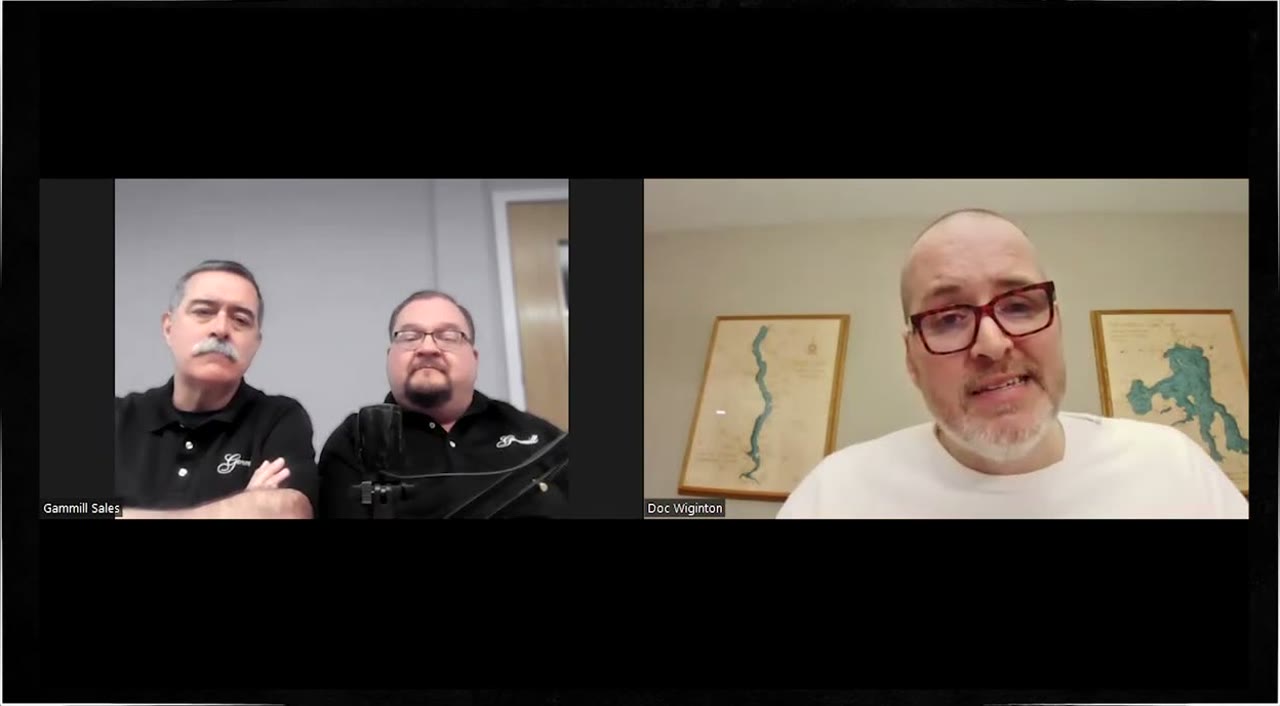
Doc’s pricing model is designed for clarity and trust. He charges an all-in price that includes batting (80/20 by default), thread, needles, and trimming—no hidden fees. “Some longarmers will have a loading price, or a thread price, or a price per bobbin, or a needle fee, or a trim fee. So I say it’s all-in for me,” he explains.35:27 Only extras like special batting, binding, or custom labels incur additional charges.
He calculated his rates by working backwards from his desired hourly income, factoring in all consumables, and setting a per-square-inch price accordingly: “I started out with how much money I want to make per hour, and I worked backwards from there. And then I figured out how much it would cost for needles and thread and all the things. And then that’s how I set my prices per inch, per square inch rather”.36:13
Doc offers binding as an upsell, applying it on the longarm for speed and profitability: “I bind on my longarm. And so that’s a no brainer. That’s a fast, easy way to have an upsell on just about every edge to edge quilt I do. They ask me to put the binding on for them. And that’s fast. I mean, probably, that’s probably my most profitable service that I do, even more profitable than the quilting because it goes so fast”.32:11
He also provides two types of labels: an economy label stitched with the longarm, and a more elaborate embroidered label for custom quilts. Every custom quilt leaves with a free label, reinforcing his brand and adding value for the client.34:28
“Some longarmers will have a loading price, or a thread price, or a price per bobbin, or a needle fee, or a trim fee. So I say it's all-in for me.”
Certificates of Authenticity: Adding Value and Protection
One of Doc’s signature touches is providing a Certificate of Authenticity with each quilt, listing materials, labor, and replacement value. Originally inspired by the art world, these certificates have proven invaluable for clients making insurance claims after loss or damage. “They used the certificate for a claim on a quilt. Its value is documented, yeah,” he shares.28:05
Doc started making certificates for his own quilts, but soon clients began requesting them. “They feel very accomplished when you give them a certificate that they’ve finished this quilt and that it’s art and that it has that kind of cultural value,” he explains.26:33
He includes a breakdown of materials, labor, and an estimated replacement cost, which can be especially helpful when gifting a quilt: “It’s sort of tacky to say I spent $500 on fabric and $600 on quilting. So take care of this. But if you say, oh, here’s your certificate that goes with it from the artist and from me, right. With some care instructions, I think it’s much less likely to end up in the dog bed or, you know, on a shelf in the attic”.27:13
Calculating the value is based on his experience as a piecer and local commission rates: “I can tell, you know, this is quilt shop quality fabric or that was two jelly rolls worth… The labor is a little bit trickier. I know what I charge per hour to piece because I used to do it. And I also know in my area, there’s a couple ladies who will make quilts for people on commission… And I always round up a hair to make the math easy. And that’s what it is. It’s not outrageous. I always think if somebody has to have this replaced and I have to make this again, what am I going to charge? And that’s how I sort of figure it out”.29:43
Most clients now expect this extra, and it has become a key differentiator for his business: “Now that I’ve started it, I don’t think my ladies will let me stop. Ladies and gentlemen, I should say I’ve got a few guys who I go to”.28:56
“They used the certificate for a claim on a quilt. Its value is documented, yeah.”
Community Engagement and Teaching as Business Growth
Doc’s commitment to teaching and community outreach has brought new clients and kept his business vibrant. He runs group quilting workshops for Girl Scouts, senior centers, and other organizations, often using no-sew or fusible methods to make quilting accessible to all ages and abilities. “I’ve picked up a lot of customers from those kind of events,” he says.39:30
He describes how these workshops use up fabric scraps and support good causes, while also introducing quilting to new audiences: “Everybody in the program might make a block, usually with fusible. And I take my scraps from my own piecing and from my own work, put fusible web on the back, and then sort of curate the colors so it makes sense based on a theme… And then usually somebody in the group is well-intentioned and will sew the blocks together for me. If not, I got to sew 12 blocks together. These aren’t real difficult pieces usually. And then I load it on my longarm, and I do the applique on the longarm. So I’m doing applique and quilting at the same time. So it’s like a one-and-done kind of procedure”.37:42
Organizations can raffle off or donate the finished quilts, and Doc benefits by gaining exposure and new clients: “The organization can raffle it off, or the Girl Scouts can take it to the NICU to donate it. And so they have something, a real quilt that they can use, which is awesome. And here’s the best part. I’m using up stuff that would otherwise end up in the landfill, right? So there’s not a lot of money spent on putting this together. And I’m charging for the quilting. I’m still getting paid, right? And all of that group, that whole group of moms and grandmas and dads, right? Oh, you know what? That was pretty cool. You know what? I think I could make a quilt. And so I’ve picked up a lot of customers from those kind of events”.39:16
He also notes that working with these groups is his way of giving back without getting bogged down in endless charity quilt work: “This is how I do the charity work by working with those groups”.40:25
Artistry, Education, and Personal Fulfillment
With a background in theater and education, Doc brings a storyteller’s eye to quilt design, emphasizing unity and narrative in his custom work. “I think about my quilts, they have to tell a story just like a play does. They have to be, they’ve got design just like a play does, right? The pieces have to, sometimes the pieces or the blocks are kind of like the characters in the story, right?… I certainly think about unity and those design ideas that I was taught and we practiced in the theater. I apply them to quilting every day”.44:26
He credits quilting with providing both creative fulfillment and the flexibility to manage health challenges and life’s demands: “Quilting has offered me… another way to use those skills directly. And it’s connected me with a whole new community,” he reflects.49:25
Doc’s transition from theater to quilting was born of necessity—he needed a quilt and used old clothes to make one at his mother’s suggestion. “I was cold and I was poor and I had a lot of clothes in the corner. And my mom said, why don’t, instead of throwing those away, why don’t you sew them together and make a quilt?… And then I found all of the beauty and the flow and all this stuff, right? The necessity birthed the beauty”.47:52
He values the freedom quilting gives him: “I think having kind of goes back to that freedom of being able to take a day off when you need to, to go look for inspiration when you need to, to do those things, quilting has allowed for that… I have a neurological problem that makes it hard for me to, there are days I just can’t work, right? I just can’t do it. And on those days I don’t, maybe I read a quilt book or I look at other stuff, right? I can do other things. I can still work on my business without quilting. And that’s awesome”.48:47
Doc’s story underscores that a quilting business can be both practical and deeply rewarding—if you build it around your strengths and values.
“Quilting has offered me... another way to use those skills directly. And it's connected me with a whole new community.”
Questions this interview answers
How do I set up my studio to run two longarm quilting machines?
Doc recommends arranging your machines so both control surfaces are within a few feet and in your line of sight. This allows you to monitor both simultaneously and quickly address any issues, minimizing interruptions to your creative flow.4:11
What is included in Doc Wiginton's all-in longarm quilting price?
His all-in price covers batting (80/20 unless otherwise requested), thread, needles, and trimming. Only extras like special batting, binding, or labels are charged separately.35:27
How does Doc Wiginton add value for his quilting clients?
He provides a Certificate of Authenticity with each quilt, listing materials, labor, and replacement value. This not only adds perceived value but can help clients with insurance claims if the quilt is lost or damaged.28:05
How can I streamline production for multiple edge-to-edge quilts?
Doc chains several quilts on a single backing, starting with the largest and working down, which keeps tension even and reduces downtime between projects. He also encourages clients to collaborate on backing to speed up turnaround.8:31
How did Doc Wiginton transition from another career to quilting?
Originally trained in theater and education, Doc started quilting out of necessity and soon discovered its creative and personal rewards. He found that his design and storytelling skills from theater translated well to quilt artistry.49:33
Source
This article was written from Episode 57 of Quilting Business Success with Doc Wiginton. Quotes are verbatim and link to the moment in the recording. Full transcript · Markdown version.